Building Unreasonable Loyalty
CPG companies spend a lot of time trying to cultivate loyalty. They launch affinity-driving campaigns, track purchase rates over time, field A&Us, measure Net Promoter Score, and monitor engagement metrics across channels—all in service of winning a disproportionate share of consumers’ minds and wallets. And yet, if you subscribe to Byron Sharp’s How Brands Grow philosophy, loyalty is virtually nonexistent; the only real way to grow is through penetration. Are marketers wasting their time?
In industries like travel, hospitality and financial services, firms use rewards programs to create loyalty “beyond reason.” (Consider the choice of saving $200 on a flight or earning Platinum medallion status.) These companies tend to own customer relationships, a dynamic that affords them first-party data, richer branded experiences and the ability to control the message. With CPG brands, scaling beyond a certain point typically means relinquishing control. Absent a direct relationship, their brand story loses fidelity, and they exist at the mercy of the merchant.
And yet, some brands manage to transcend this dynamic. Despite disintermediation and with no subscription plans or fancy tiered rewards programs, a select few manage to achieve what can only be considered “unreasonable loyalty”—that is, they win consumer choice even when cheaper and more readily available alternatives exist. They simultaneously grow both penetration and share of wallet. We set out to understand how these brands cultivate unreasonable loyalty and identified a set of core principles brand builders at any stage can apply.
Achieving unreasonable loyalty comes down to three things:


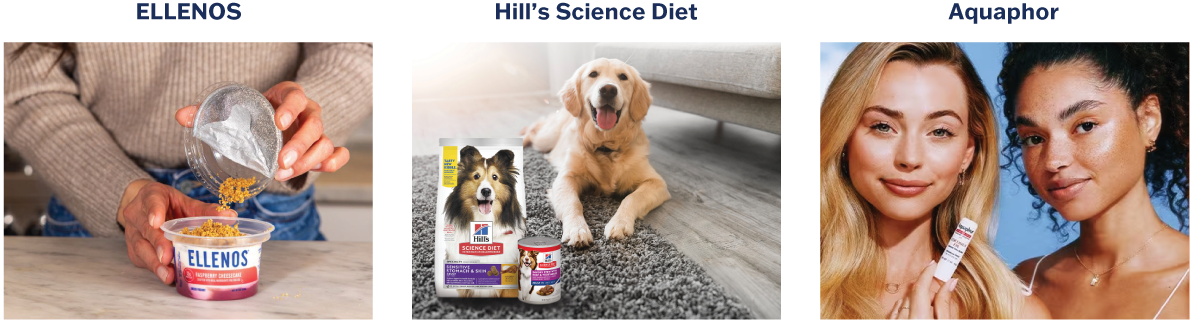
Sometimes unreasonable loyalty boils down to delivering an experience that competitors simply can’t replicate. That experience could be sensory (e.g., a proprietary taste or texture), aesthetic (e.g., a visual and/or design experience that makes alternatives feel like a sacrifice) or functional (e.g., a product that works demonstrably better than anything else or ‘locks you in’ based on habit or ease).
ELLENOS is Greek yogurt with a creamy texture and mouthfeel that’s unrivaled in the category. It’s closer to Italian gelato than it is Fage, which helps explain the dessert recipes on the brand’s website and food porn on Instagram. This unique sensory experience allows ELLENOS to command a hefty premium: at $3.99 per tub, it’s more than twice the price of Chobani on a per ounce basis—and consumers are more than happy to pay up.

Hill’s Science Diet competes in dog food—not the sexy, fresh home-delivery meal kits, but brown, dry kibble. And yet, it has earned industry-leading pet parent loyalty through a combination of superior efficacy and high switching costs. Its proprietary ActivBiome+ innovation harnesses decades of scientific research to deliver noticeable immunity, digestion and vitality benefits. And once dogs eat it regularly, assuming they tolerate it well, there’s virtually no reason to ever switch. A 27.5-lb bag of Rx-grade Biome sells for $145 vs. $63 for Chewy’s private brand.

Aquaphor has built a reputation as a magic ointment, with “put some Aquaphor on it” being the go-to advice for everything from dry, cracked skin and minor scrapes and burns to diaper rash, pimples, dry cuticles and more. The product itself is just petroleum jelly that forms a breathable protective layer on the skin. But it’s a master class in building consumer loyalty and trust: a simple and safe ingredient profile, coupled with distinctive memory structures, dermatologist recommendation claim and word-of-mouth efficacy has helped fuel sustained double-digit growth for Beiersdorf’s Derma division.

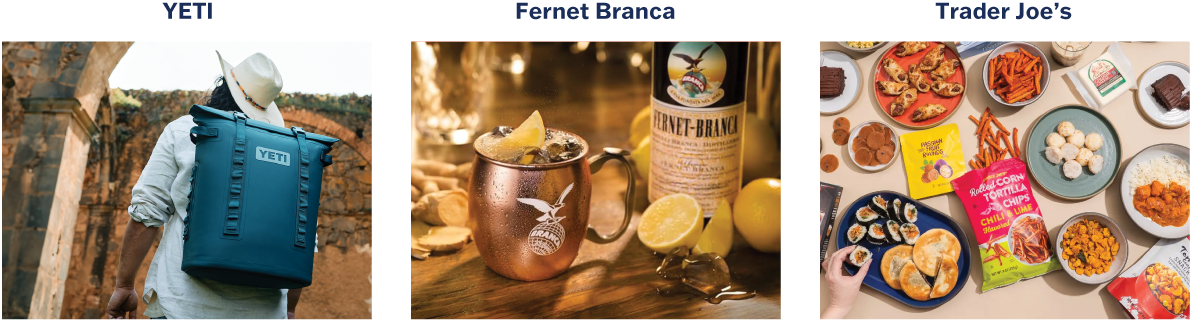
Other brands cultivate unreasonable loyalty by reinforcing consumers’ sense of identity. When brands become entrenched in identity, each purchase signals allegiance to a worldview—often to the point where switching can feel like a betrayal of self, rather than a shift in preference. This is valuable territory: the higher you go on Maslow’s hierarchy of needs, the greater your ability to develop deep emotional ties and command a meaningful premium.

YETI doesn’t just sell coolers; it sells an aspirational lifestyle. Being seen with a YETI signals an ability to afford certain creature comforts (coolers can run upwards of $400) as well as participation in a rugged, suburban outdoorsy lifestyle. Loyalty comes not just from high quality products that work, but also from a deliberate focus on making buyers feel like the envy of the neighborhood—which spans everything from design to channel strategy and commitment to environmental stewardship.
Fernet Branca is an Italian amaro with a medicinal taste profile that’s proudly not for everyone. It’s powerfully bitter, with strong notes of menthol—not unlike a grownup Jägermeister. This profile, coupled with a storied Italian legacy and vintage design that looks great in dimly lit bars and restaurants, has earned it a reputation as a
“bartender’s handshake.” Ordering a Fernet signals one of two things: you’re either
a hospitality pro or an in-the-know consumer with highly discerning taste. Either way, this dynamic has propelled the brand north of $500MM, an impressive feat in a softening beverage alcohol market.
Trader Joe’s breaks nearly every rule in the grocery book. And yet, its formula of limited SKUs, majority private label products, constantly changing assortment and no discounting has created some of the industry’s most fiercely loyal shoppers. This playbook helps patrons signal that they’re savvy, value-conscious and a little less
“mainstream” in their tastes. The strategy helps explain why TJ’s boasts
industry-leading sales per square foot.

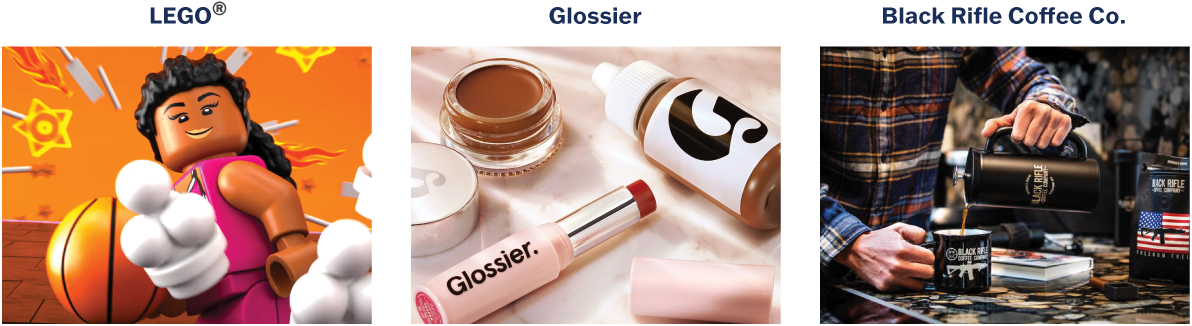
Brands also win unreasonable loyalty by building and facilitating community—appealing to consumers’ desire to belong to something larger than themselves. Some brands actively engage consumers in co-creating products and experiences; others simply invite them to participate in ways that make them feel more involved. The common thread: brand as a vehicle for human connection.

LEGO® cultivates community in a way that makes it look more like an entertainment company than a toy manufacturer. The brand uses a platform of creativity to give its intergenerational tribe of builders endless ways to connect, from in-person building events and digital forums to special edition fandom crossovers (Star Wars, Harry Potter, Marvel), TV & movie content (LEGO® Masters, The LEGO® Movie), theme parks and more. AFOL (“adult fan of LEGO®”) has even worked its way into the vernacular, further testament to the brand’s community-building power.

Glossier originated as “Into the Gloss,” a beauty blog by founder Emily Weiss, who harnessed that early, highly engaged audience to co-create the beauty brand it is today. Glossier nurtures community through a collaborative approach to brand building—iterating with consumers on product evolution & innovation, prioritizing real consumers over models in advertising, amplifying user-generated content and setting up retail stores as places to connect over shared experiences, rather than merely transact.

Black Rifle Coffee is a veteran-founded coffee company for “people who love America.” The brand is unequivocal and single-minded about its community across product naming, packaging design and its commitment to giving back to veterans, first responders, and men and women in uniform. This community is paying off: in a tough commodity category, Black Rifle grew net revenue 7% to $400MM in 2025 and scaled distribution to an impressive 55% ACV.

Looking across these examples, two things are clear about unreasonable loyalty. First, the most successful brands aren’t asking, “how do we keep you buying?” but rather, “how do we keep you believing?” Second, the secret isn’t owning the relationship—it’s owning the story consumers tell themselves. At scale, brands that crack this do it by finding channels—not retail channels, but cultural channels—where that story keeps getting reinforced.
Interested in exploring how your brand can cultivate unreasonable loyalty?
Let’s talk about what’s possible: Let’s discuss: info@seuratgroup.com.