Inside Expo West 2026: The Trends That Matter
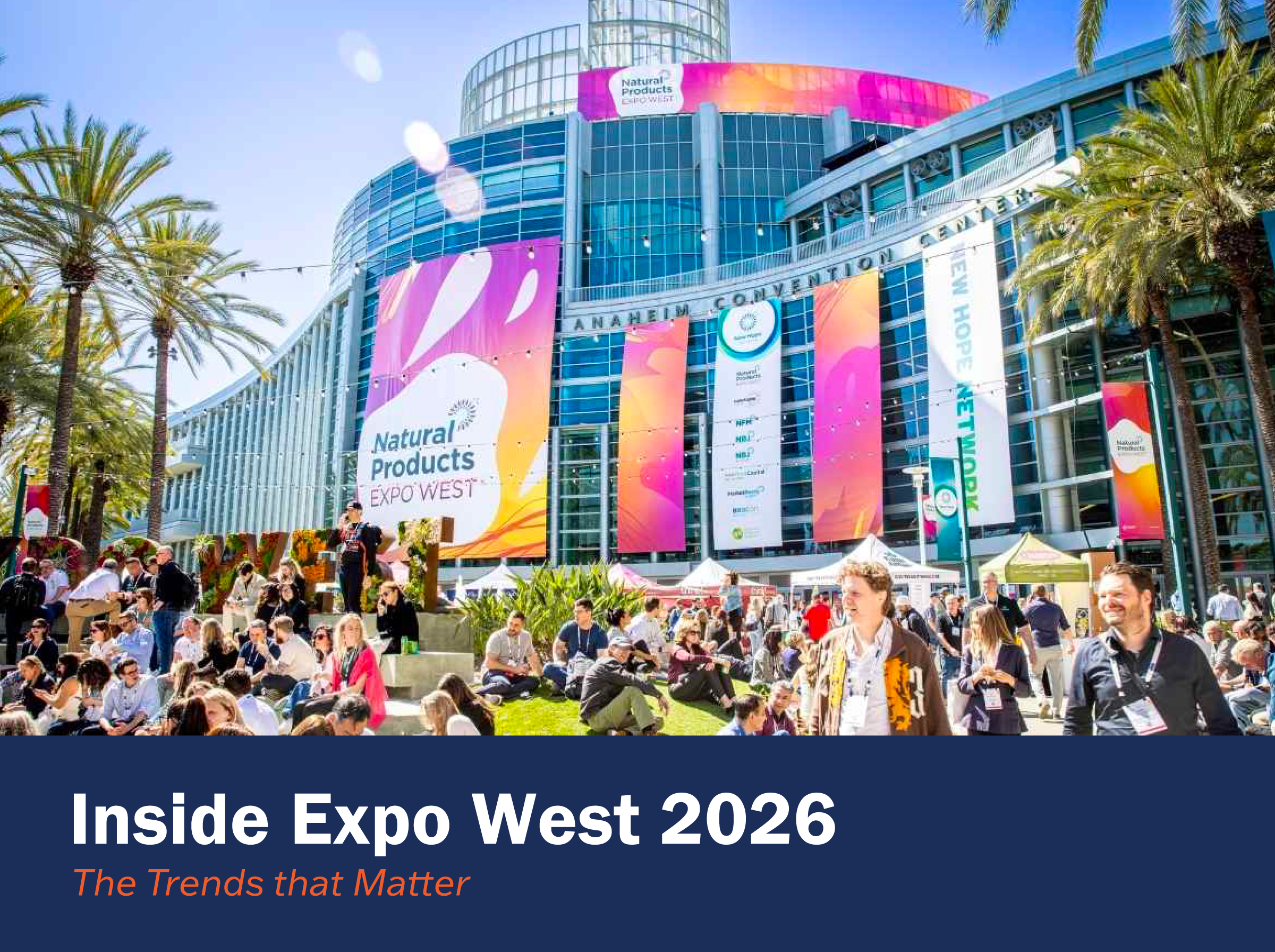
Each spring, Anaheim becomes the center of the CPG universe. Founders arrive with their passionate ideas, buyers hunt for the next breakout brand, and thousands of industry obsessives descend on Expo West to taste, debate, and trend-spot their way through the future of CPG. Team Seurat joined the fray once again this year—zig-zagging the halls of Expo West 2026 to scout the signals shaping the next wave of CPG.
Of course, no Expo is complete without the unofficial currency of the show – the swag bags. This year’s contenders generated almost as much buzz as the products themselves, from Goyard-inspired totes to puffy Muscle Milk bags and Goodles collectible “Brand BFF” charm bracelets (yes, we proudly collected them all).
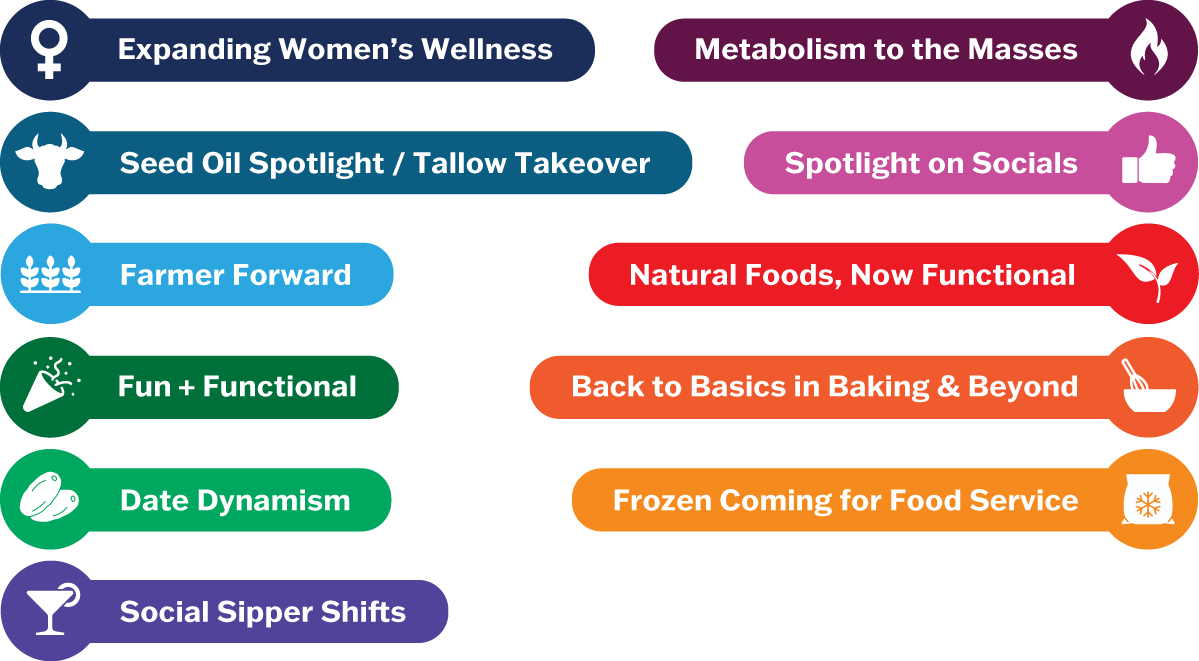
But beyond the tote bags and taste tests, Expo West remains the prime spot to take the pulse of where CPG is heading next. Many of the trends we identified last year are still going strong. The long-running protein parade marches on, taking on new and ever more creative forms. The Asian Frozen Feast has expanded into a broader frozen-versus-foodservice battle. And the “non-alc” space continues to evolve alongside shifting social rituals, building on the Mocktail Mojo we spotted. Several emerging themes have also clearly stepped into the spotlight — from the Great Animal Revival to Even Energy to what we’ve affectionately dubbed Honey, It’s Date Night. While we typically keep our roundup to a tidy top 10, this year Expo was extra – and so are we. So 11 trends it is. Here’s what we’re watching…
Expanding Women’s Wellness
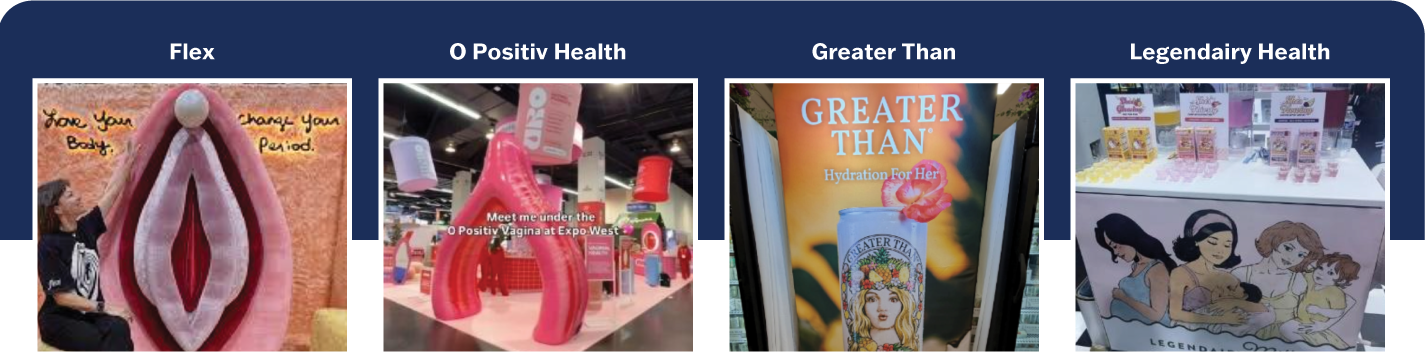
Women’s wellness wasn’t hiding at Expo West this year—it was on full display. From larger-than-life displays to boldly branded booths, women’s bodies and health needs were made overtly visible in a way that pushed stigma to the sidelines. The category no longer feels interested in whispering; instead, it is showing up with more confidence, candor, and cultural presence.
What felt especially notable was how far the conversation extended beyond period care. We saw solutions spanning adjustable menstrual discs, sexual wellness, and support for women across cycles and life stages—from pregnancy and breastfeeding to concerns like “mommy brain,” menopause, feminine balance, and hydration tailored to women’s needs. As awareness grows around the fact that women’s bodies have distinct needs—and that many of those needs have long been overlooked in a male-default world—brands across categories are beginning to respond more directly. What was once sidelined or simplified is increasingly being treated with greater specificity, nuance, and legitimacy.

Seed Oil Spotlight / Tallow Takeover
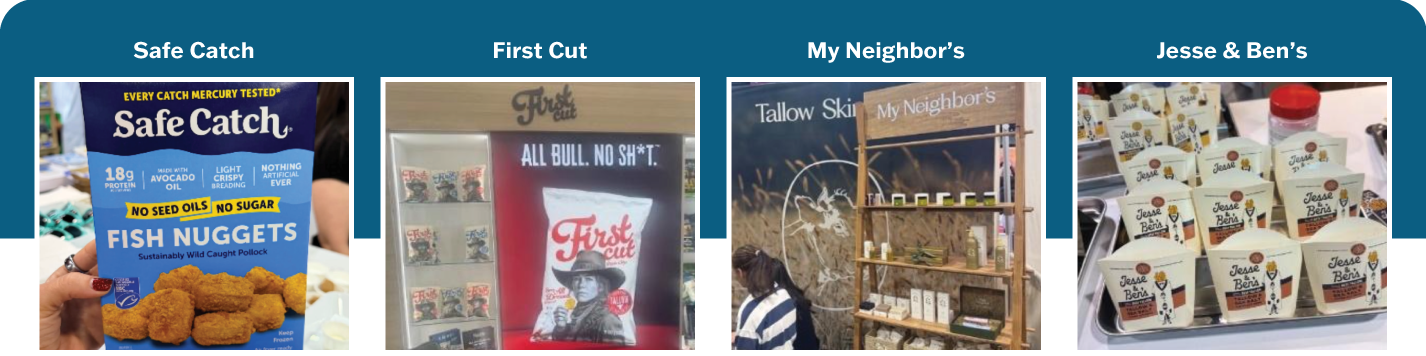
You almost could have played punch buggy with “no seed oils” claims at Expo West this year. Across food and beverage, the callout was everywhere—showing up on everything from bars and chips to coffee creamers, and starting to feel like one of the defining badges of the show floor. More than just an ingredient claim, “no seed oils” often functioned as shorthand for cleaner, more trustworthy formulation.
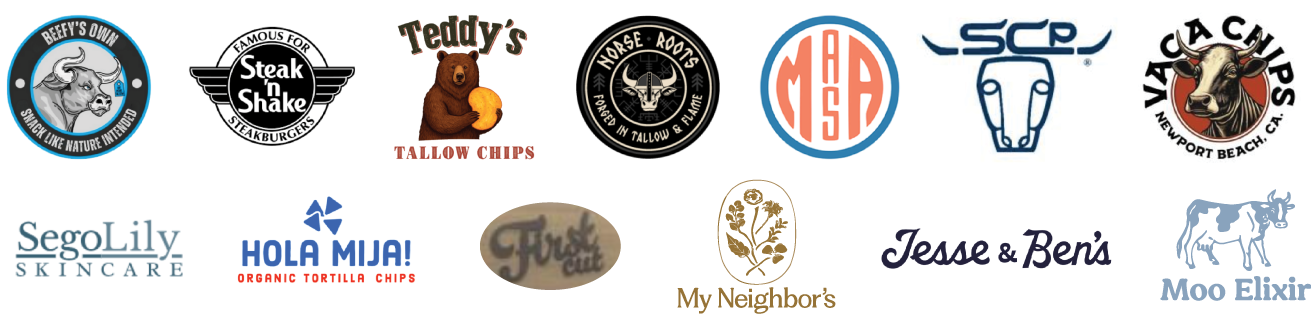
At the same time, tallow was turning up in places that would have felt surprising not long ago, from chips to skincare, signaling a broader return to traditional fats. Beneath the headline-worthy claims is a bigger shift in how consumers are thinking about fat itself. As skepticism grows around industrial food systems and highly processed ingredients, more brands are tapping into the idea that older, more familiar fats may feel more natural, wholesome, and trustworthy. What once seemed like settled nutritional wisdom is now back on the table, with consumers reexamining which fats they want in their food—and even on their skin.
Tallow:
No Seed Oils:
Farmer Forward
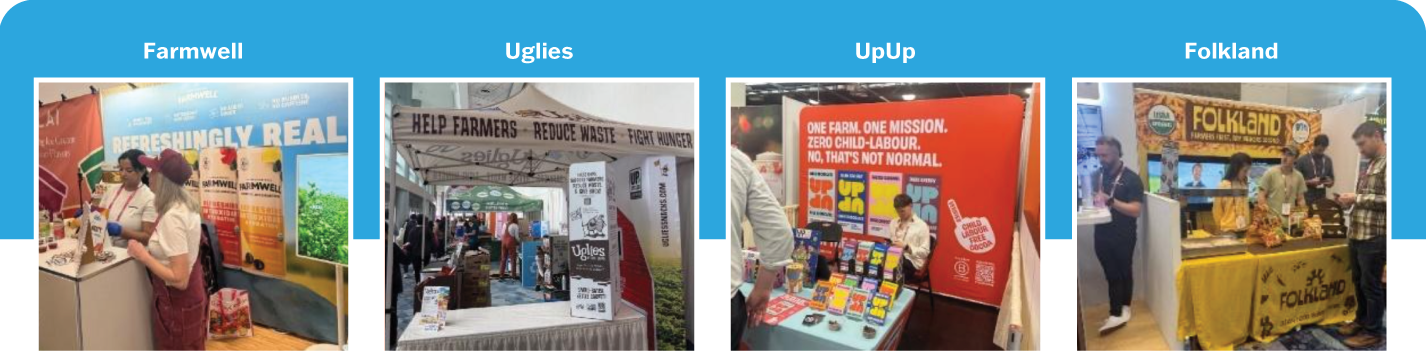
One word seemed to show up everywhere at Expo West this year: farmer. From booth signage to packaging to brand storytelling, brands leaned heavily into the people and places behind their products— highlighting farmer ownership, generational farms, regional sourcing, and closer connections between growers and consumers. Across categories, the emphasis was not just on what the product was, but on who grew it, where it came from, and the land it came from.
Connection to food is increasingly being built through stories of origin, the people who grow it, and the land it comes from. In a landscape where modern food systems can feel abstract and far removed, these cues help make products feel more grounded, transparent, and trustworthy. The result is a subtle but meaningful shift—from anonymous ingredients to food that feels rooted in real people and real places.
Fun & Functional
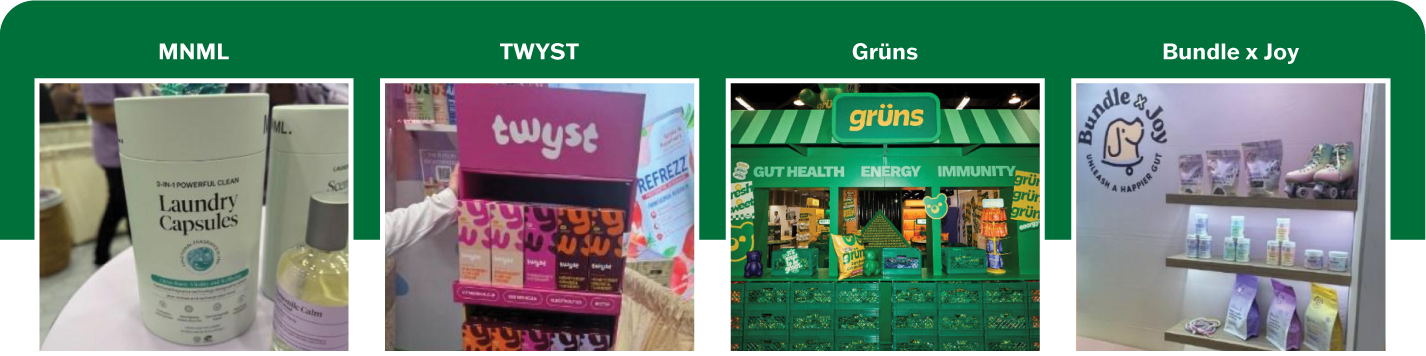
For years, functional health lived mostly in the world of VMS—clinical language, supplement bottles, and benefit-heavy messaging defining how consumers accessed wellness benefits. Over time, beverages helped bring functionality into more everyday routines. But Expo West suggested the next chapter may already be underway: functionality escaping both capsules and drinks to show up in entirely new formats.
Across the show floor, benefits like energy, focus, gut health, glow, and relaxation were showing up in formats designed to spark curiosity and trial—from gummies, laundry capsules, pouches, gums, superfood spreads, skincare, wellness straws, and pet products. As the functional marketplace becomes increasingly crowded, brands are experimenting with formats that make wellness feel less clinical and more playful. Instead of asking consumers to adopt a strict regimen, these products weave functionality into everyday moments—inviting people to experience health benefits in ways that feel more surprising, accessible, and fun.

Date Dynamism
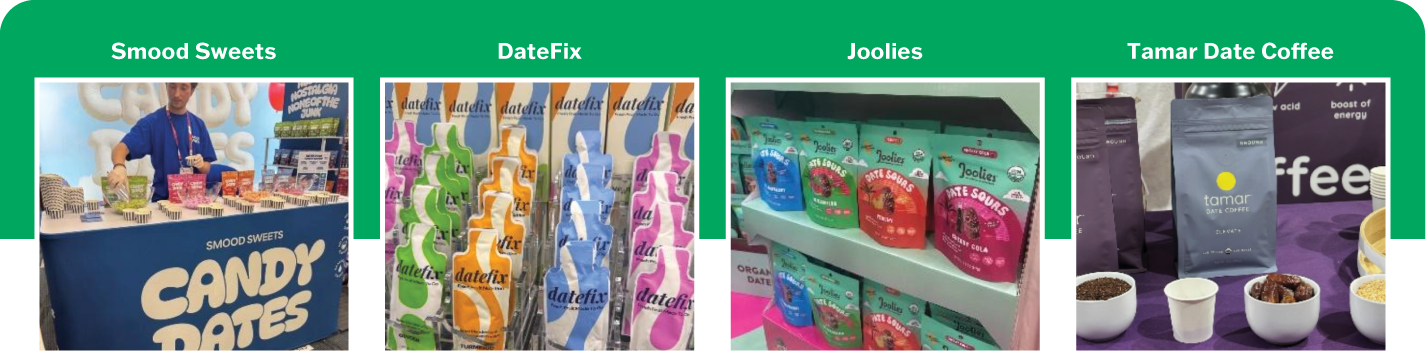
Dates are having a moment—and this year they were everywhere. While we spotted early signals of this trend last year, Expo West 2026 made it clear that dates are moving into the spotlight. Across the show floor, they showed up in formats ranging from snack bars and chocolates to syrups, spreads, and beverages, signaling that the ingredient is quickly expanding beyond its traditional associations. More than just a fruit, dates are increasingly being used as a way to deliver sweetness, texture, and substance across categories.
Their rise is also tied to a broader sweetener identity crisis. As consumers grow more skeptical of refined sugar, artificial sweeteners, and newer alternatives that can feel overly engineered, brands are actively debating what sources of sweetness feel most natural, trustworthy, and nutritionally meaningful. In that conversation, dates stood out as a clear frontrunner. They bring natural sweetness alongside fiber and other nutrients while offering something many sweeteners do not—satiety and a lower glycemic index through the combination of fructose & glucose. In a landscape full of sweetener confusion, dates are emerging as an ingredient that helps products feel both indulgent and wholesome.

Social Sipper Shifts
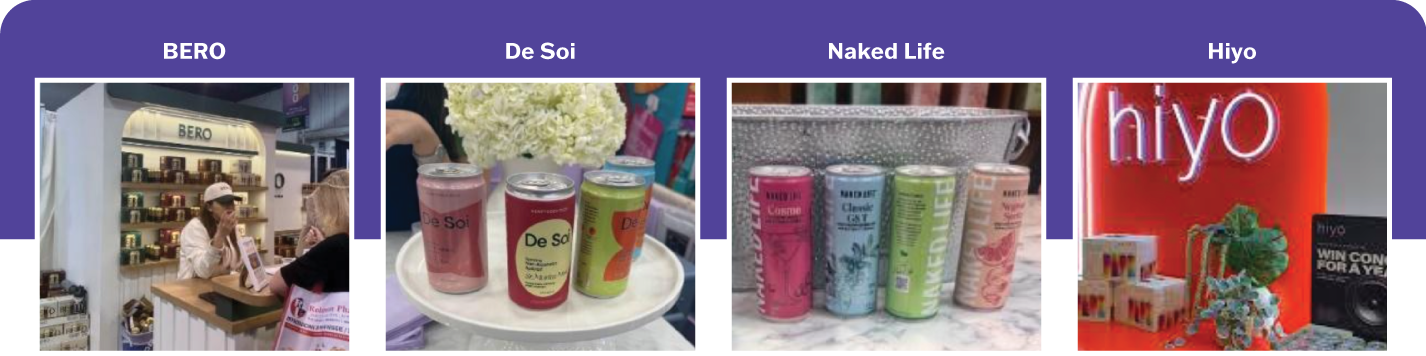
The sober-curious movement isn’t slowing down—but the category built around it is evolving. For years, alcohol-free beverages largely positioned themselves as substitutes for traditional alcohol, often centering on mimicry and replacement. But Expo West suggested the space is starting to move beyond that frame. Across the show floor, beverages were increasingly positioned around the feeling they create—whether that be calm, relaxation, uplift, focus, or a more social kind of buzz.
That shift points to a bigger change in what these drinks are being asked to do. Rather than simply standing in for alcohol, they are helping create entirely new rituals around how people unwind, connect, and socialize. For many younger consumers, alcohol is not necessarily something they are trying to replace—it is simply less central to their lifestyle to begin with. As a result, the opportunity is expanding from alcohol removal to mood creation—with brands designing beverages for the vibe, not just the void.
Metabolism to the Masses
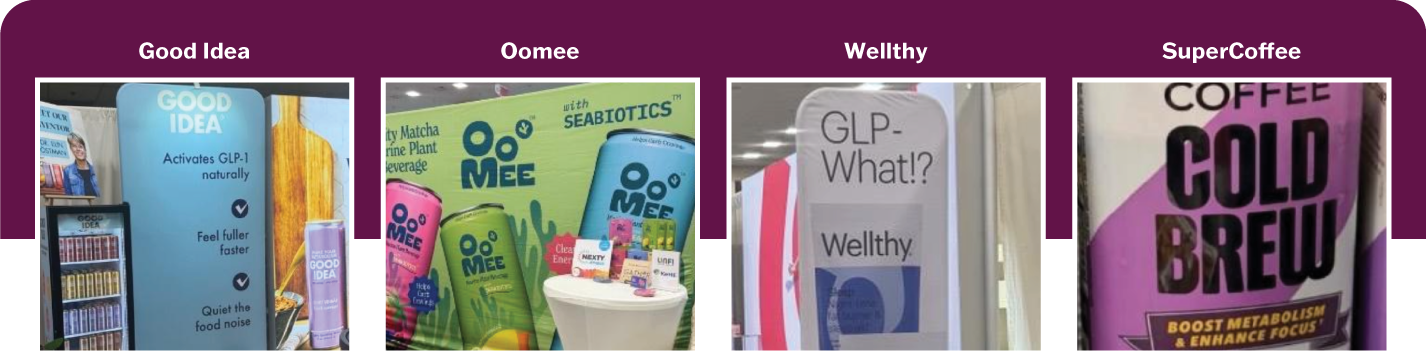
For years, metabolism mostly lived in the worlds of clinical nutrition, fitness culture, and wellness diehards. Not anymore. Thanks in large part to the rise of GLP-1 medications, metabolism has entered the mainstream in a whole new way—bringing concepts like blood sugar balance, satiety, gut health, and metabolic efficiency into everyday consumer conversation. Expo West made it clear that brands are moving quickly to meet that shift, whether by speaking directly to GLP-1 users or by tapping into the broader outcomes people increasingly want: fullness, steadier energy, better blood sugar balance, and more support for weight management.
What stood out most was how quickly metabolism is becoming part of the vernacular. As consumers get more familiar with the mechanisms behind hunger, fullness, and weight, metabolism is starting to feel less like a niche health concept and more like everyday wellness shorthand. People are not just chasing weight loss—they are getting smarter about the system behind it.

Spotlight on Socials
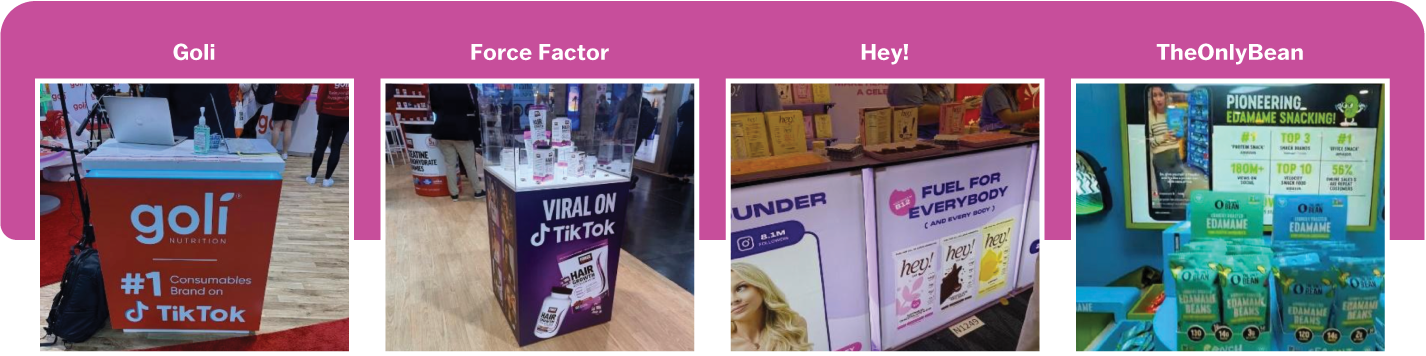
Scroll, like, buy, repeat. Social commerce has officially entered its main character era. Across Expo West, TikTok Shop, creator-led commerce, and social buzz came up again and again as powerful engines of discovery and demand generation. But more than that, social traction increasingly seemed to function as a kind of proof point—evidence that a brand has relevance, resonance, and real consumer pull. Booths proudly called out viral moments, creator momentum, and online success as signals that the brand was already winning with consumers.
That shift showed up across the show floor. Booths were designed to be filmed, shared, and talked about, with interactive activations and visually punchy moments built for content. Celebrity-backed brands added another layer of buzz, using star power to drive awareness and amplify talk value. Altogether, the message was hard to miss: in today’s landscape, success is not just measured by distribution—it is measured by attention. Social credibility is increasingly becoming both a reason to believe in a brand and a leading indicator of who earns the next shelf set.
Natural Foods, Now Functional
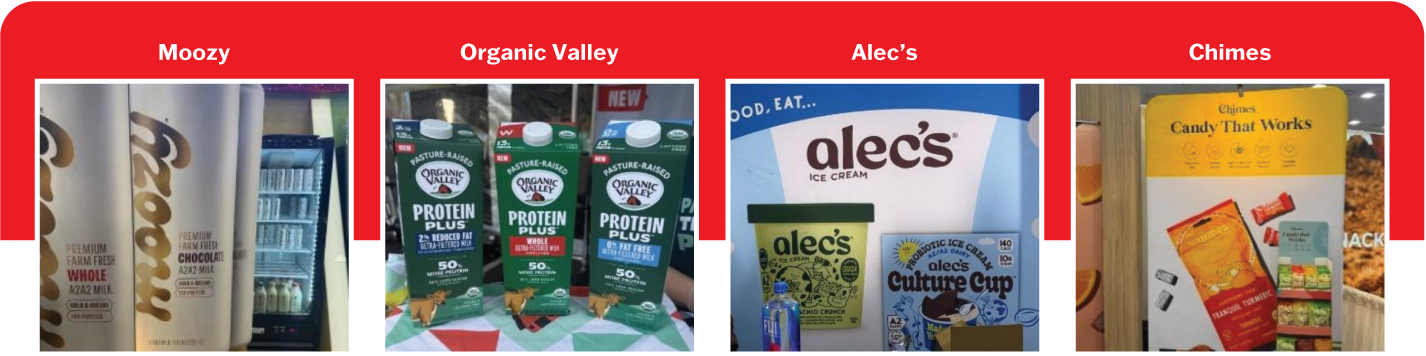
For years, Expo West innovation largely meant adding something extra—adaptogens, probiotics, collagen, or another functional boost layered onto foods and beverages. This year, the energy felt different. Instead of only fortifying products from the outside in, brands were increasingly unlocking functionality from the inside out—either by reengineering familiar foods to do more or by spotlighting the benefits already inherent in natural ingredients.
Dairy was one of the clearest examples of the first path. Once limited by a more traditional understanding of what milk could be, the category is being modernized through things like A2 proteins, ultrafiltration, and improved digestibility—expanding milk’s functional potential for today’s consumer. At the same time, other brands were leaning into the naturally occurring benefits of ingredients themselves, highlighting the specific compounds and properties found in foods like tomatoes, tart cherries, and ginger. Together, these approaches point to a broader shift: in a world increasingly skeptical of ultra-processed foods, functionality feels most compelling when it comes from real foods—or from a smarter understanding of what those foods can already do.

Back to Basics in Baking & Beyond
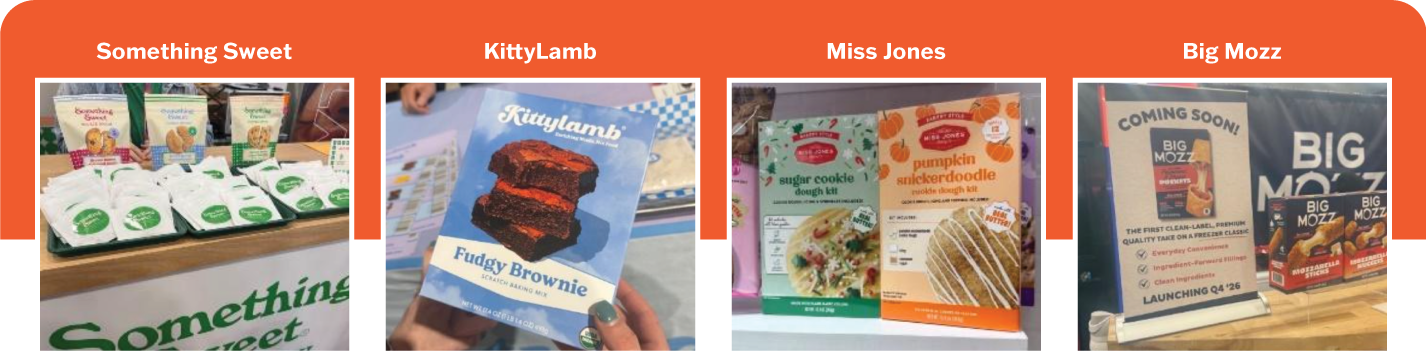
Expo West has long been a playground for reinvention. For years, brands looking to “upgrade” categories often did so by adding functional benefits or reworking familiar foods through alternative ingredients. That innovation was still present this year—but the pendulum also seemed to swing in a different direction: back toward real, simple, delicious food.
That shift showed up most clearly in baking, but it extended into other indulgent categories too. Whether in sweets, pizza, or comfort-food classics, brands seemed less interested in reinventing the original and more interested in restoring what made it lovable to begin with. Across categories, the emphasis was on cleaner ingredient decks, more premium formulations, and foods that felt more homemade, artisanal, and true to the enjoyment of the original. More than anything, these brands seemed focused on closing the gap that has so often existed between “better-for-you” and genuinely delicious—proving that high-quality ingredients and real enjoyment do not have to be at odds.
Frozen Coming for Foodservice
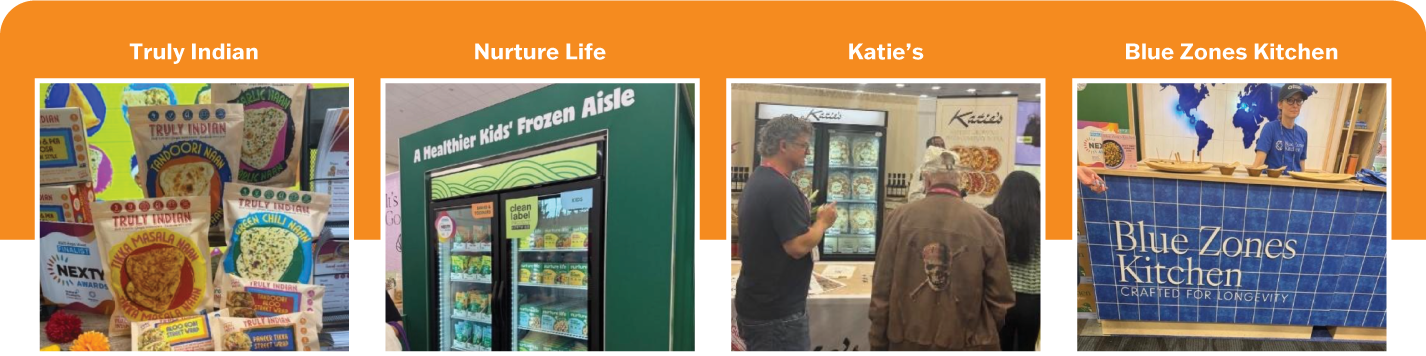
Boy, has the frozen aisle leveled up. A new generation of brands is working to reintroduce consumers to frozen by delivering the kind of quality, culinary credibility, and ingredient integrity that many may not associate with the set. Across Expo West, frozen products showcased globally inspired meals, chef-driven recipes, and cleaner ingredient decks designed to rival the quality and excitement consumers increasingly expect from foodservice.
That shift was especially visible in globally inspired cuisine, where frozen brands brought more authenticity, culinary specificity, and restaurant-like appeal to the aisle. Whether through dumplings, noodles, curries, or grain bowls, frozen brands seemed less interested in acting like pantry staples and more interested in acting like your favorite takeout spot. For consumers who may have written off the freezer years ago, these brands are making a case to come back—offering the convenience of frozen without the compromise once associated with it. As restaurant prices climb and convenience remains non-negotiable, brands that can deliver authentic, foodservice-quality experiences from the freezer are well positioned to win. The result is a growing standoff between restaurants and the frozen aisle—and frozen is coming in hot.

Expo West is where early signals start to look like real momentum. This year’s show made clear that consumers are seeking products that feel more real, more purposeful, more delicious, and in step with how they want to live.
Curious how your business can get in on these and future trends before they gain momentum at Expo West? As always, we welcome conversation at info@seuratgroup.com.